Thomas Mason: The Mill and Its Fabrics
If you have ordered a made-to-measure shirt from us, the chances are it was cut from Thomas Mason fabric. The name has been on shirting since 1796, and what it stands for is a particular English taste in stripes and checks, drawn from the mill's own archive, woven in extra-long staple cotton spun to fine counts. This is the history in brief, then the fabrics we regularly use and what sets each one apart from the one next to it.

The mill
Thomas Mason began weaving cotton shirting in Lancashire in 1796. Until then the English textile trade had been built on wool, and cotton for shirts was still mostly imported or woven on handlooms. The timing was good: the industrial revolution was reaching the mills, and the London shirtmakers of Jermyn Street, who dressed the aristocracy and the officers of the Empire, wanted cotton of a quality nobody else was producing at scale. Thomas Mason became their supplier, and through the nineteenth century the fabric went wherever British tailoring went.

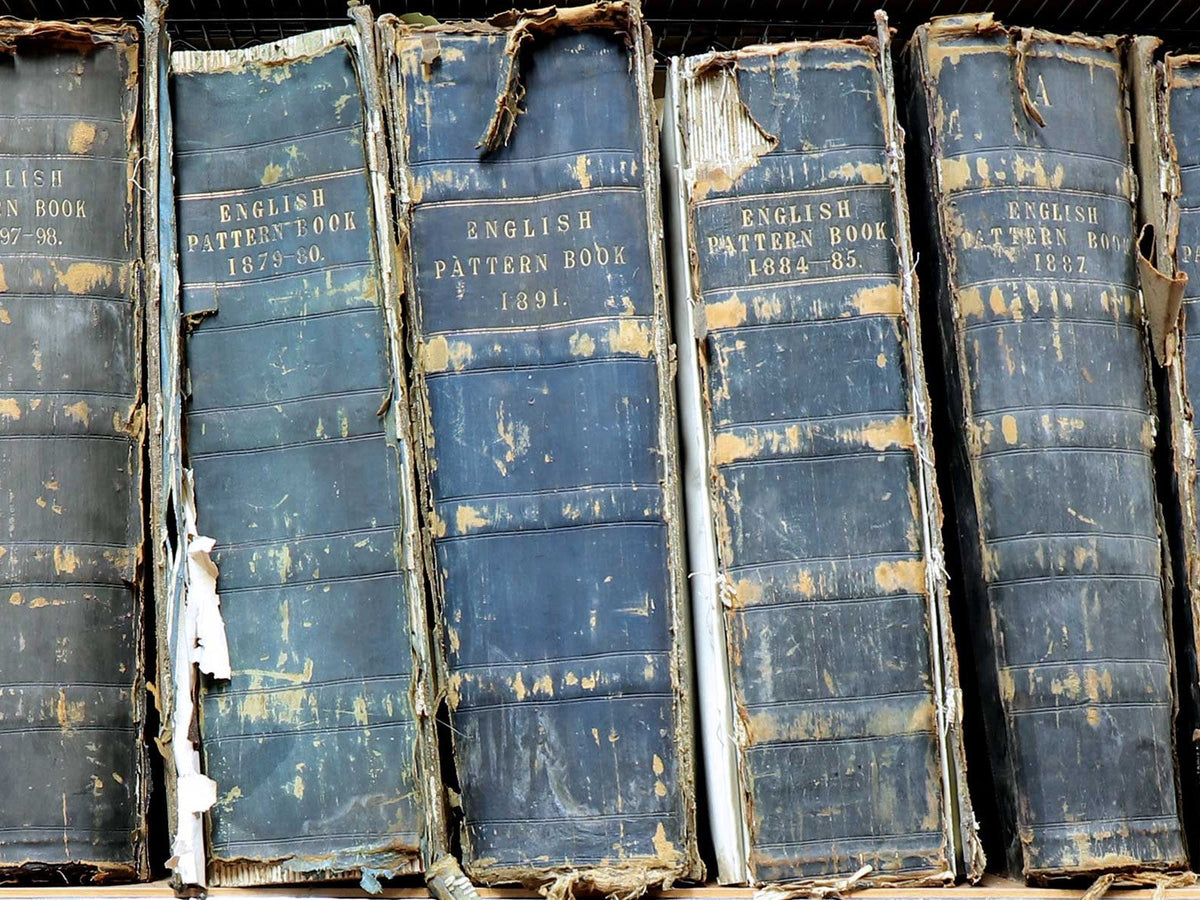
In 1992 the brand was bought by the Albini Group of Bergamo, the largest shirting weaver in Europe, together with an archive of some seven hundred pattern books going back to the eighteenth century. The fabric is woven in Italy now. What makes it recognisably Thomas Mason is the archive, which is where the stripes and checks still come from, and the raw material. The mill works in extra-long staple cotton: Egyptian Giza, of which the rarest grade, Giza 45, is grown in a small corner of the eastern Nile Delta and picked by hand at around ninety bales a year, and American Supima from California. Long fibres spin into finer, stronger yarn, and finer yarn is what every fabric below depends on.

A note on yarn counts
Every fabric below is described by two figures, such as 120/2 x 100/2. The first number is the fineness of the yarn: the higher it is, the finer the thread. The second is the number of strands twisted together, so /2 is two-ply and /1 is a single yarn. The first pair describes the warp, the threads running the length of the fabric; the second describes the weft, running across. Where the two differ, the difference is usually the point of the weave.
Oxford
Oxford is a basketweave, as explained in our guide to shirt fabrics: a group of warp threads crosses a thicker weft, which gives the surface its slightly uneven texture. Thomas Mason weaves it at three weights and we use all three.
American Oxford is the heaviest, at 175 to 185 grams. It is woven with a 40/1 warp against a 10/1 weft, a fine single yarn crossing a very coarse one, and that imbalance is what gives it the pronounced texture. In the beginning the fabric feels stiff and stands away from the skin. It softens over the first year of washing and keeps softening after that. This is the fabric of the classic oxford button-down, and it is what most people picture when they think of the shirt.
Premium Oxford, which the mill lists as Oxford 75, sits in the middle at 145 to 155 grams. The warp is two-ply 80s and the weft three-ply 38s, so both yarns are finer and plied, and the texture is there without the weight.
Indigo Oxford is the heaviest in the range at 189 to 207 grams, woven from a 60/2 warp and a 24/2 weft dyed with indigo. It wears like a denim shirt with an oxford's surface, and like denim the colour fades slowly at the collar and cuffs.
Pinpoint
Pinpoint is an oxford woven with fine yarn on both sides. Where a plain oxford crosses a thick weft over a fine warp, pinpoint uses two fine plied yarns, so the basketweave is still there but at a scale you see only up close. The result is a fabric smoother than oxford and with more body than poplin. It is the most adaptable shirting we offer: it holds a collar under a suit and tie, and the same shirt works with the tie off and the sleeves rolled.
We use two. The Pinpoint 120s is woven from a 120/2 warp and a 100/2 weft and weighs 111 to 117 grams; it is the finer of the two. The Pinpoint 80s, which the mill calls Cambridge, is 80/2 both ways at 127 to 137 grams, a little heavier and a little more textured, closer to an oxford in feel.
Poplin
Poplin is the plainest of the shirting weaves, a simple over-under structure with no texture in the surface. Everything rests on the yarn, which is why the yarn count matters more here than anywhere else. Thomas Mason weaves several, and three of them are the backbone of our formal shirts.

Portland is 120/2 in both warp and weft, 100 to 120 grams: fine, smooth and light, with enough twist in the yarn to hold a crisp collar. It is the fabric for a white or light blue shirt under a suit, and it is woven in stripes as well as plains, the stripes on the quieter side.
Downing has the same 120/2 warp but a single 70s weft, which gives the fabric a fraction more body and a surface that carries a bolder stripe. It is named after the street in Westminster. Where Portland's stripes are fine, Downing's are the ones you notice across a room.

Silver is the oldest fabric in the mill's range, in the collection since 1796 and in the Jermyn Street windows ever since. It is a 100/2 poplin, yarn-dyed rather than piece-dyed, so a stripe or check is woven in rather than printed on, and the colours stay clean through washing.
Twill
Twill is woven with the weft passing over two warp threads and under one, which produces the diagonal line you can see at an angle to the light. The long floats in the weave do two things: they catch the light, so a twill has a soft sheen that a poplin lacks, and they let the fabric move, so it drapes more fluidly and resists wrinkling as the day goes on.
The Twill 120s is 120/2 both ways at 111 to 120 grams, woven from Supima cotton. It is the smoothest fabric we offer and the one to choose for a shirt that has to look pressed at the end of the day. The cotton cashmere twills are the winter version: a brushed surface with cashmere in the blend, warmer than the weight suggests, for a shirt worn under a sport coat from October to March.
Denim
Victoria is Thomas Mason's shirting denim. It is a twill like the one above, but with a 60/2 indigo warp against a 120/2 weft, so the face of the fabric is blue and the back is nearly white, the way a pair of jeans is built. At 134 to 141 grams it is a shirt weight, not a jeans weight. The fabric is washed before it reaches us, so the shrinkage has been taken out, and from there it softens and fades with wear. We offer it in a rinse wash, which is the deepest blue, and a light wash.
Linen
Thomas Mason's linen is grown in northern Europe and woven in a plain weave at the mill's usual fine count, and it behaves as linen does: it is cool against the skin, it dries fast, and it creases. The creases are part of the look and no amount of ironing changes that for long. We offer it in white and two blues, for the months when cotton feels like too much.
Checks and ginghams
The tattersall is the country check, two colours of fine line on a pale ground, and ours are woven on a poplin base. The ginghams are woven in zephyr, a light, airy plain weave that was the summer shirting before linen became fashionable for shirts. Both are yarn-dyed, so the check is in the weave.
Non-iron
The non-iron poplins are Thomas Mason's standard 120s poplin with the mill's Anti-crease Formula+ finish, which lets the shirt come out of the wash and hang dry without pressing. The mill does not publish how the finish works, so we will not guess, but we have worn the shirts and the claim holds. The hand is very slightly firmer than the untreated Portland. For someone who travels, or who simply does not iron, it is the practical choice.
Selecting a fabric
If the shirt will be worn with a suit and tie, start with Portland in white or light blue, or Downing if you want a stripe that shows. For a jacket without a tie, the Twill 120s, which reads a notch less formal than poplin and drapes more softly. For a shirt worn on its own, the American Oxford or the Premium Oxford, depending on how much weight you like; most customers who buy one end up buying the other. Denim and linen are weekend fabrics. The non-iron poplins are for anyone whose shirts have to survive a suitcase.
If you want one fabric that covers all of that, our suggestion is the Pinpoint 120s. It is formal enough for a suit and relaxed enough without one, and it is the fabric we find ourselves recommending most often.
A closer look at our made-to-measure shirts
Each shirt is cut to your measurements in Italy. You choose the fabric, then the collar, cuff and fit, and whether the shirt is made with three operations worked by hand or six. Every fabric in this article is in our made-to-measure shirts collection, where the configurator takes you through the rest. If you would like help choosing a fabric, we are in the shop in Haarlem and on customercare@besnard.co.